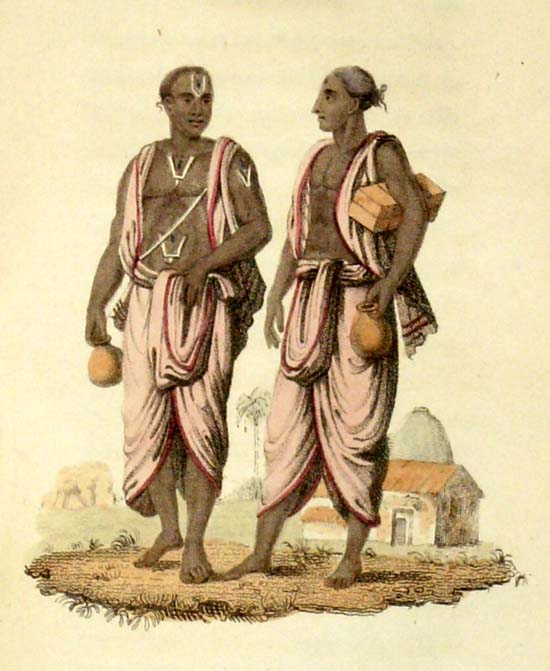
Everyone knows cruelty and ruthlessness of the KINGSHIP (state) and POWER. Every king in the history was very cruel, ruthless, merciless, brutal, massacred, blood thirsty, heartless, murdered and committed unimaginable atrocities. Some kings were sadistic, some kings executed their own families, including brothers, sisters, niece, nephew, rivals and exiled their own kids. Some kings burned books, writings, scholars and scientists who failed to find a way were beheaded and buried alive.
But why the king allowed to place the Brahmin on top of him (king/raja/rajanya/raj) in status a peculiar situation in India? What way Brahmin helped king to run his kingdom?
Earliest times of Aryans (around 1700 BCE), probably after aryans settled down in small hamlets on banks of Saraswati river from pastoralists;
In India, in the very earliest times of aryans, Rajanya (or Raja or Rajan) and brahman existed in a true symbiosis (saha jeevanam) in which the latter protected the former against the magico-religious risks inherent in the exercise of the royal function, while the former maintained the latter in a place equal to or above his own.
As Indian society, at a very early stage, solidified the Indo-European tripartite division of social estates into “castes” and the brahman and rajanya became the eponyms of the two highest castes (brahmana, rajanya), so the same interdependence is to observed, broadened in its scope but just as clear in its mechanism, between the brahmana and the rajanya. This interdependence, a commonplace in the literature of every epoch, is defined in numerous texts.
Sometimes the third caste, that of the vaisya the herdsmen-cultivators, “to whom the Lord of creatures gave charge solely of cattle” is contrasted with the brahmana and rajan “bloc”, who are in charge of “all creatures”.
Sometimes, in an internal analysis of that bloc, we read that the rajanya cannot prosper without the brahmana nor the brahmana “increase” without rajanya; but that by uniting or “overlapping” (samparkam), the essences of the two castes (neuter brahman and neuter ksatra) will “increase” both in this world and in the other world.
As early as the Vedic texts, which precede the classical caste system, the reduced solidarity of raj and brahman is stated clearly (RV IV, 50, 8); http://www.sacred-texts.com/hin/rvsan/rv04050.htm
स इत कषेति सुधित ओकसि सवे तस्मा इळा पिन्वते विश्वदानीम |
तस्मै विशः सवयम एवा नमन्ते यस्मिन बरह्मा राजनि पूर्व एति ||
“He lives prosperous in his abode (home), to him the earth is prodigal of all its gifts, to him the people (vis) are obedient of their own accord, that rajan in whose house the brahman walks in first place (yasmin brahma Rajani purvah eti).”
I attempted to establish what the structure of this interdependence was during those very early times, why the raj wished to maintain within his household a personage to whom he yielded precedence. Evidence from ritual and legend let me to believe that this brahman “joined” to the king was originally his substitute in human sacrifices of purification (shuddi) or expiation (prayachitam) in which royal blood itself had once flowed (once rajan itself performed human sacrifices of purification or expiation in those small hamlets).
By the time Indian society becomes observable, the brahman is already far from that probable starting point. It is not with his sacrificial death that he serves the raj but with his life, each moment of which is devoted to the administration and “readjustment” of magic forces.
Brahmin Innovations (Readjustments)
- Rig-Veda– Around 1100 BCE It has 10 mandals (books), 1028 Hymns. The first hymn 1.1 addressed to agni (=brahman). (..rigveda)
- Sama Veda
- Yajur Veda
- Atharva Veda – Around 200 BCE
- Upanishads – 800 BCE to 400 BCE
- PuranasVishnu Purana
- Garuda Purana
- Srimad Devi Bhagavatam
- Harivamsa
- Brahmanda Purana
- ApastambaDharma-sutra
- Kalpa-Sutra
- The Sacred Laws of the Aryas – Apastamba and Gautama
- Vishnu-smriti / Vaishnava Dharmasastra / Vishnu –sutra – Narada and Brihaspati 600 BCE
- Satapatha Brahmana
- Grihya Sutras
- The Laws of Manu
- Mahabharata
- Ramayana
- Bhagavad Gita
- Vedanta-sutras
- Aranyakas – Sankaracharya
- The Aphorisms of the Sánkhya Philosophy, by Kapila
- Tantra
- Shakti and Shakta
- Kalabhirava
- Kamasutra
So many like the above …. Essence in all of the texts is related to “Spirituality”, Brahmans spirituality is one kind and represented as best kind of coercive power.





comment closed