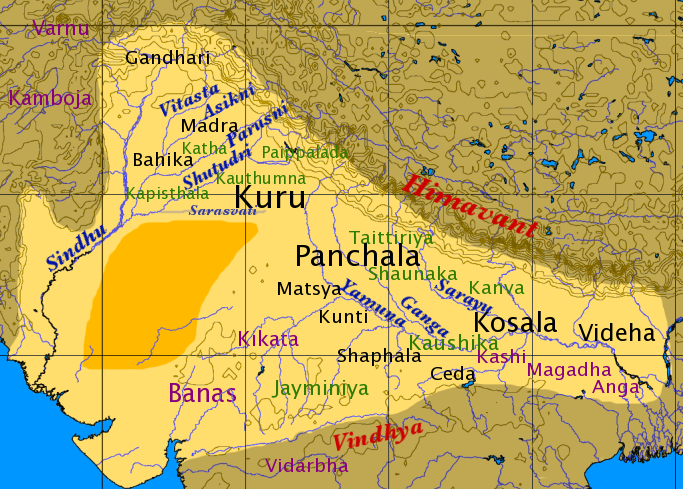
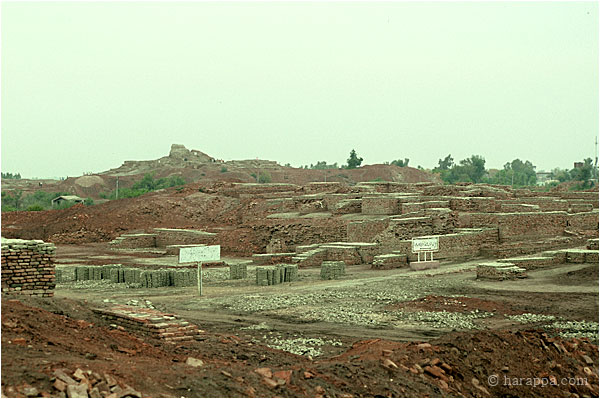
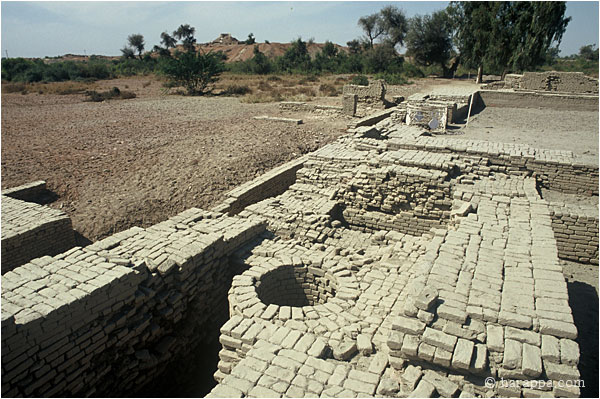
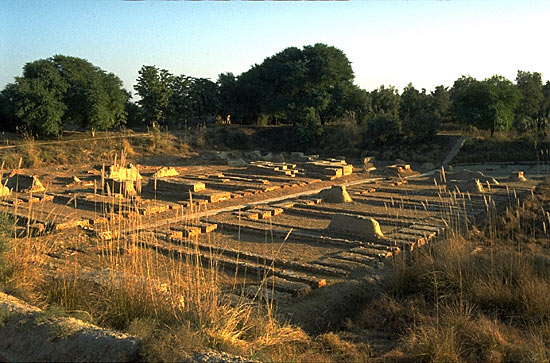
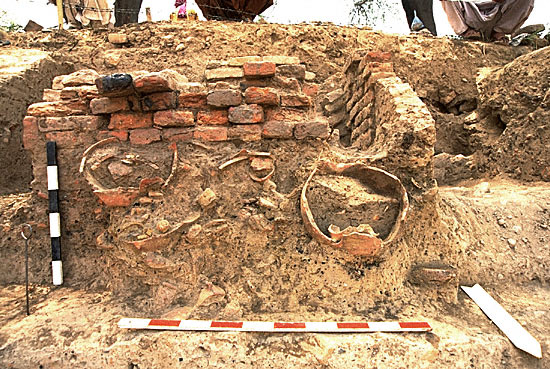
The Caste System of India constitutes the social structure of Hinduism, which is Brahmanic society. Thousands of years ago Aryans from Iran area came to India in a number of tribal waves through the passes of the Hindu Kush over a period around the year 2000 BCE. After demise of Indus Valley Civilization (around 1700 BCE) (Indus valley People language considered to be Dravidian or Mundari or Unknown Language, script not yet deciphered), Aryans settled down on the banks of Saraswathi river from pastoralists nomads.
These Aryan people language Vedic Sanskrit is an Old Indo-Aryan language. It is an archaic form of Sanskrit, an early descendant of Proto-Indo-Iranian. It is closely related to Avestan, the oldest preserved Iranian language. Vedic Sanskrit is the oldest attested language of the Indo-Iranian branch of the Indo-European Family. Dravidian languages ..
Classificatory system “Varna”, is invention of Aryans whose power and privilege were in part based on their very ability to seize the enunciative function and expatiate on how the universe is organized.
While coming to India these Aryans brought tripartite ideology from their Mittani Kingdom, Iran; archeology terms (BMAC – Bactria-Margiana Archaeological Complex) which divides society into three “Functions”: religion (Brahmin), rule & defense (Kshatriya) and productivity (Vaishya).
Brahmin priests who generated the categorical system also placed themselves in an advantageous position within it.
It extended to “QUADRIPARTITE” (Four – Varna) to include, non-Aryan Indigenous inhabitants Indus Valley People as Shudras.
It extended to “PENTADIC” adding “PANCHAMUDU” during Gupta dynasty period to bring “Buddhists” back into Varna – System, Agraharam, constructing temples started during Gupta period. Before Gupta dynasty, the emperor Ashoka period entire India from Iran to South India converted to Buddhists.
Later expanded classificatory scheme to accommodate more and more non-aryan indigenous inhabitants within its fold, as they were expanding their influence from north India to south India.
Brahmin, Kshatriya and Vaishya are “twice born” or initiated (“Upanayana” or “Vadugu”) full members of Aryan society. Shudras are excluded from Vedic sacrifices.
Lot of castes like “Reddy”, “Kamma” doesn’t have Upnayana or Vadugu or Initiation, they are just Shudra Castes.
These Aryan Brahmin priests wrote numerous texts like Vedas, Upanishads, Puranas, etc in Sanskrit language which defined and explained the three functions as Varna System, Brahmin, Kshatriya and Vaishya.
There are four Vedas, the Rig Veda, Sama Veda, Yajur Veda and Atharva Veda. Scholars have determined that the Rig Veda, the oldest of the four Vedas, was composed about 1500 BCE, and codified about 600 BCE. It is unknown when it was finally committed to writing, but this probably was at some point after 300 BCE.
The Veda was preserved only orally and it was transmitted from teacher to pupil within the Brahmin class who had staked a special claim to knowledge of it.
Almost every book of these Brahmin Priests … explained about only above three Varna’s, Brahmin, Kshatriya and Vaishya.
So knowledge of Vedas is the Knowledge of classification of
- UNIVERSE
- SOCIETY
- SOCIAL CLASSES
- GODS
- ANIMALS
- SPACE
- TIME
- FLORA
- FAUNA
- REVELATION
INTO THREE (3) CATEGORIES (TRIPARTITE) AND RESERVING TO
THREE ARYAN CLASSES NON ARYAN CLASS (Indigenous)
- BRAHMINS SUDRA (SERVENT CLASS)
- KSHATRIYA LORD RESERVED ONLY ONE ACTIVITY
- VAISYA “SERVING” ARYAN CLASSES without resentment.
On the name of god’s creation … these people …. wrote….. From the beginning of time.
Universe is divided into three categories, Earth equal to Brahmin, second part atmosphere equal to Kshatriya and third Sky is equal to Vaishya.
Created Agni (Fire) from Earth equal to Brahmin, Vayu (wind) from atmosphere equal to Kshatriya and Surya (Sun) from Sky equated to Vaishya.
http://www.sacred-texts.com/hin/rvsan/rv10090.htm … (Rig Veda Book 10 Hymn 90 .. stanza 11 & 12)
यत पुरुषं वयदधुः कतिधा वयकल्पयन |
मुखं किमस्य कौ बाहू का ऊरू पादा उच्येते ||
बराह्मणो.अस्य मुखमासीद बाहू राजन्यः कर्तः |
ऊरूतदस्य यद वैश्यः पद्भ्यां शूद्रो अजायत ||
Human Body is divided into Four, Face equal to Brahmin, Arms equal to Kshatriya, Thighs equal to Vaishya and Feet equal to Shudras.
Gods got divided into three parts, Agni, Vasus are Brahmin gods, Vayu, Indra, Rudra are Kshatriya gods and Surya, Aditya, Varuna are Vaihya gods.
Animals are divided into three categories … goat equated with Brahmin, horse with Kshatriya and cow with Vaishya.
In all the books .. Sometimes the third Varna, that of the Vaishya the herdsmen-cultivators,
“to whom the Lord of creatures gave charge solely of cattle”
the brahmana and rajanya/kshatriya “bloc”, who are in charge of “all creatures”.
Everything on the universe, what ever they know was divided into three categories … and equated or reserved to one of the three Varna’s Brahmin, Kshatriya and Vaishya.
All the Slokas or Stories in those books are related to one of the three varnas … not even single sloka or sthothra or story or god or an animal were reserved to Shudras …
Why did they divide entire universe into three categories and reserved to three Varna’s? Are they crazy?
The Varna system was first and foremost scheme for dividing society into separate functionally interdependent classes and only secondarily a means for similarly classifying other realms like spatial, gods, goddesses, animals, flora, fauna, scriptures by projecting social truisms into them.
Their aim is to show, entire world, animals, gods, goddesses, trees, spatial, scriptures, rituals everything got divided into three Varna’s, how could an organization of society remain in different way? That’s why society got divided into three varna’s.
These Brahmin priests of India because of literary skills (not innovators just literates) and persuasive power achieved social dominance and in pursuit of their interests they crystalized Varna system as tradition so effectively.
All through history, from 1700 BCE after the demise of Indus Valley Civilization, down to the period of British rule one foreign power after another foreign power breaking through the northwestern gateway hidu-kush mountains.
But the result in all cases was little more than change of rulers – the deposition of one dominant caste and the substitution of another. The lives of common people, their social conditions, systems of local government, movability of work between three Varnas were barely affected by such conquests.
Indian institutions have therefore a long unbroken history which makes the study especially valuable.





comment closed